Basement bathroom remodeling in Greensburg can make a lower-level space significantly more practical. Whether you are finishing your basement for guests, creating a secondary living area, or adding a home office, having a bathroom nearby makes the space easier to use day to day.
At the same time, building a bathroom below grade is not a scaled-down version of an upstairs project. Basement projects come with different conditions that influence everything from plumbing to lighting.
Understanding how these factors work together will help you plan a bathroom that functions reliably, not just one that looks finished.
When homeowners first consider adding a basement bathroom, the focus often starts with layout ideas or design preferences. In reality, the first step is determining whether the space can support a bathroom at all.
Because basements are located below ground level, they are affected by gravity, moisture, and limited access to existing systems. Basements often experience poor drainage, reduced air circulation, and structural elements or utilities may already occupy key areas.
This means the project’s success depends less on surface choices and more on how well the space is evaluated upfront. A well-planned basement bathroom accounts for what is happening behind the walls and beneath the floor before any design decisions are finalized.
Plumbing is the factor that most often shapes the design of a basement bathroom, yet it is also the one homeowners most often think about last. In below-grade construction, plumbing is not just about connecting fixtures. It determines what is possible and where the bathroom can realistically go.
Not every basement is immediately equipped with a full bathroom, including a toilet, sink, and shower. In some homes, the main drain line is positioned above the basement floor. When that happens, wastewater cannot move out of the space using gravity alone.
In those cases, additional systems may be required to move water upward into the main line. While this does not make a bathroom impossible, it does affect both the design and the project’s overall scope.
In most cases, placing the bathroom closer to existing plumbing lines simplifies installation. Moving it farther away often means opening more of the floor, rerouting lines, and increasing labor.
This is why layout decisions should begin with a plumbing evaluation. It is much easier to adjust a design early than to rework it after construction has started.
Many homes in Greensburg have aging plumbing systems that were not designed for modern layouts. Pipes may be undersized, worn, or made from outdated materials, which can limit how well the system performs once a new bathroom is added.
These types of old plumbing issues can lead to common bathroom plumbing problems, such as slow drainage, inconsistent water pressure, or hidden leaks that develop after the space is finished. In some cases, homeowners realize too late that their system cannot support additional fixtures without upgrades.
Understanding why plumbing matters in bathroom remodeling helps you avoid designing a space that your home cannot properly support. Addressing these concerns early helps ensure a smoother project and more reliable results over time.
Moisture is a constant factor in basement environments. Even in well-maintained homes, basements tend to have higher humidity than the upper levels. When a bathroom is added, daily use introduces even more moisture through showers, sinks, and general airflow.
Without proper planning, that moisture can gradually affect the space. It may not be obvious right away, but over time, it can lead to material damage, musty odors, or poor air quality, making the basement less comfortable to use.
A well-designed basement bathroom addresses this from the beginning. That includes selecting materials that can withstand damp conditions and ensuring proper ventilation is built into the layout. An exhaust fan is not just helpful in a basement bathroom; it is essential for consistently managing humidity.
It is also important to think beyond the bathroom itself. If the surrounding basement has moisture concerns, those conditions will eventually impact the bathroom as well. Treating the entire lower level as part of the plan leads to more stable, long-term results.
It is common to assume that a basement offers a blank slate, but in practice, the layout is often guided by what is already in place. Structural supports, ductwork, electrical systems, and plumbing lines all compete for space and influence what can realistically be built.
Rather than forcing a bathroom into a specific location, it is usually more effective to work with these constraints and design around them.
In some situations, this may mean adjusting expectations about the size or type of bathroom. A full bath may not fit comfortably in a certain area, while a powder room or three-quarter bath may provide a better balance of function and space.
What matters most is how the bathroom works within the overall layout. A well-positioned, efficient space will feel more usable and comfortable than a larger bathroom placed in a less practical location.
Lighting has a noticeable impact on how a basement bathroom feels, as natural light is often limited or absent. Even a well-designed layout can feel closed in if the lighting is not carefully planned.
Instead of relying on a single fixture, it helps to approach lighting in layers. This creates a more balanced environment and improves how the space functions day to day.
At the vanity, proper lighting reduces shadows and makes routine tasks easier. Overhead lighting ensures the entire room is visible, while additional lighting can soften darker corners and make the space feel more open.
When these elements are combined, the bathroom feels brighter and more usable. Without them, the room may feel dim regardless of the finishes or layout.
Storage often becomes an afterthought in smaller bathrooms, but in a basement setting, it plays an important role in keeping the space functional over time.
Because square footage is usually limited, storage needs to be built into the design rather than added later. This approach keeps the room organized without sacrificing usable space.
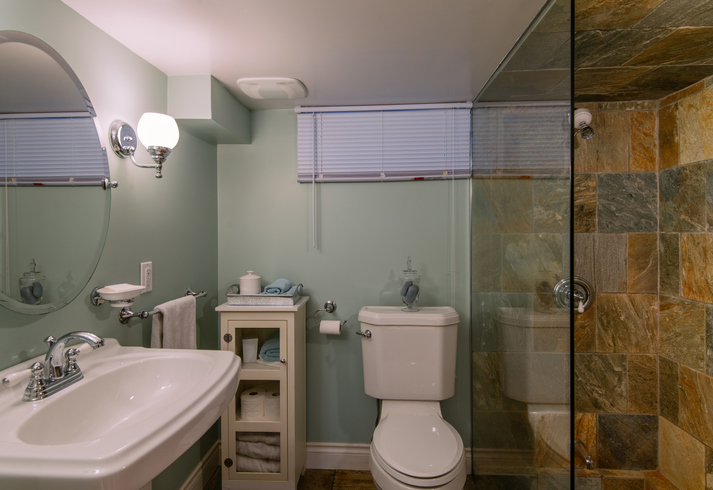
For example, vanities with built-in drawers can store everyday items without requiring additional furniture. Recessed shelving or wall niches create space for toiletries without extending into walkways. Even small decisions, like choosing fixtures that minimize clutter, can improve how the bathroom functions.
The goal is to create a bathroom space that feels clean and manageable. When storage is planned early, the bathroom is easier to use and maintain without feeling crowded.
A basement bathroom should reflect how you will use the rest of the space. The needs of the room will vary depending on whether the basement is designed for guests, daily living, or occasional use.
For example, a basement guest suite may benefit from a full bathroom for privacy and convenience. A space used primarily for entertaining may only require a simple powder room. A home gym or hobby area may call for a shower instead.
Thinking about these scenarios early helps guide decisions about size, layout, and features. It also ensures the bathroom feels like a natural part of the basement rather than an afterthought.
When considering the benefits of a finished basement, one of the most practical advantages is the space’s ability to be customized to support your lifestyle. Many homeowners explore finished basement ideas such as guest rooms, family spaces, or offices, and a well-placed bathroom makes those spaces more complete and functional.
Understanding why to finish your basement also reinforces the importance of planning each feature together. A bathroom designed to match the rest of the basement will feel more connected and useful over time.
Basement bathroom remodeling involves more variables than most homeowners expect. Plumbing, moisture control, layout constraints, and lighting all need to work together, and each decision can affect the next.
Professional planning helps bring those elements together in a way that fits your home. It allows you to identify limitations early, avoid unnecessary complications, and design a space that supports your long-term needs.
Without that level of planning, it is easy to overlook details that may impact how the bathroom performs after it is completed.
A well-designed basement bathroom can make your lower level more functional and more comfortable to use. It supports the way you live in the space and adds flexibility for the future.
If you are considering basement bathroom remodeling in Greensburg, the most important step is understanding what your space can realistically support before finalizing the design.